
Exhibits, Online Exhibits
Chinese Laundries In The U.S.
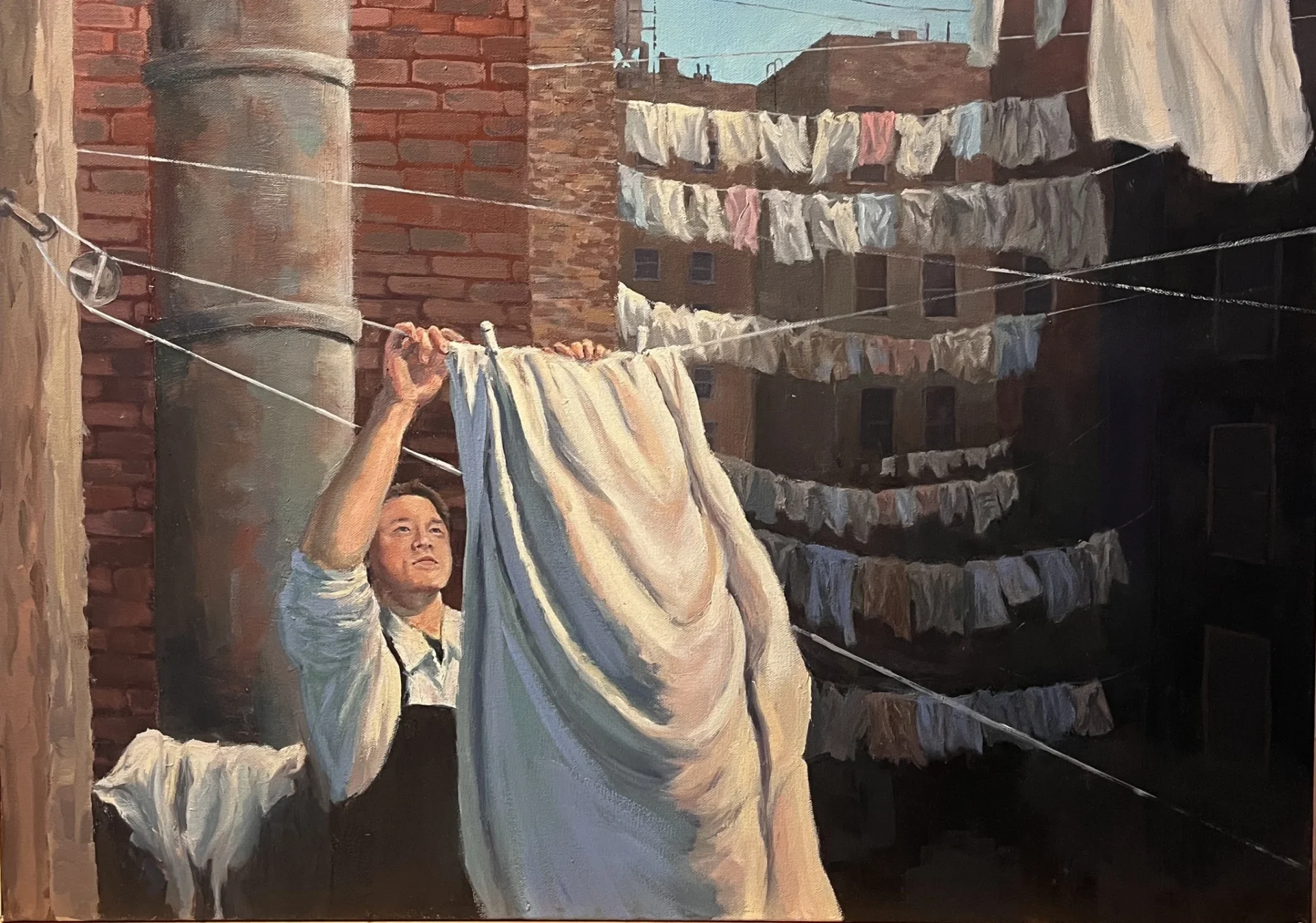
CHSA Launches Student Showcase
About the Showcase
Throughout the history of Chinese immigrants in America, laundry work has served as one of the few paths to survival that currently remains a lasting symbol of strength, community, and resilience. The collaborative showcase Challenging a White-Washed History is a multidimensional, multimedia partnership with students from San Francisco State University and the Academy of Art University that explores both the historical roots and the ongoing legacy of Chinese laundry businesses in America—from early hand-wash laundries to present-day reflections on Chinese American entrepreneurship. Featuring a multifaceted combination of academic research, oral histories, original artwork, and rare artifacts, this showcase brings the resilience of Chinese laundry workers to life.
History of Chinese Laundry Businesses
Chinese laundry businesses in America began in the mid-1800s as a survival strategy for Chinese immigrants facing racism, limited job opportunities, and exclusion from many industries. With few resources, many turned to laundry work, which possessed a low barrier to entry—little English proficiency and startup capital. By the late 19th century, Chinese laundries were common all across the U.S., particularly widespread in cities like San Francisco and New York.
Despite legal discrimination and violent racism—such as San Francisco’s permit restrictions challenged in the landmark 1886 Yick Wo v. Hopkins Supreme Court case—Chinese laundrymen persevered. The Chinese Exclusion Act of 1882 further isolated these workers, but laundries remained a vital means of support for their families and communities.
After World War II, with immigration reforms and greater social mobility, many Chinese Americans moved into other professions. As industrial laundries and home appliances spread, traditional Chinese laundries gradually disappeared. Today, laundry businesses are still very much part of the fabric of the Chinese American community, remembered as symbols of resilience and ingenuity in the face of systemic exclusion and as foundational entrepreneurial doorways in pursuit of the American Dream.
Student-Centered Collaboration
Challenging a White-washed History is the product of months of thoughtful research, creative expression, and academic partnership with students from San Francisco State University’s Asian American Studies Department, who conducted in-depth historical research and developed the interpretive wall text. Their work connects academic study with community storytelling, offering visitors a deeply informed perspective on Chinese laundry workers’ lived experiences. Click here to view the San Francisco State University’s students’ Laundry Exhibit Curriculum Guide.
In tandem, students and faculty from the Academy of Art University were inspired by archival materials, oral histories, and the legacy of laundry work in Chinese American communities. Their original illustrations and visual narratives blend historical accuracy with creative interpretation, bringing these histories to life the dignity, struggle, and resilience embedded in their everyday labor, as well as making connections to ongoing immigrant rights issues.
Together, through their research and artistry, these students articulate and honor the labor, resistance, and enduring spirit of Chinese laundry workers across the United States.
Research and Oral Histories
Students from San Francisco State University contributed original research, conducted oral history interviews with laundry business owners past and present to create the text of the showcase. Their work uncovers the struggles and resilience of Chinese laundry workers, giving voice to stories that have long been overlooked. Through careful scholarship and personal narratives, they illuminate a vital chapter of American history. Please click this link for the full oral histories.
Visualizing the Laundry Legacy
Drawing inspiration from archival research and the CHSA collection, their pieces explore themes of labor, identity, resilience, and community, students and faculty from the Academy of Art University created original artworks that honor the history and experiences of Chinese laundry workers. These creative interpretations add powerful visual storytelling to the showcase, bridging past and present through art.
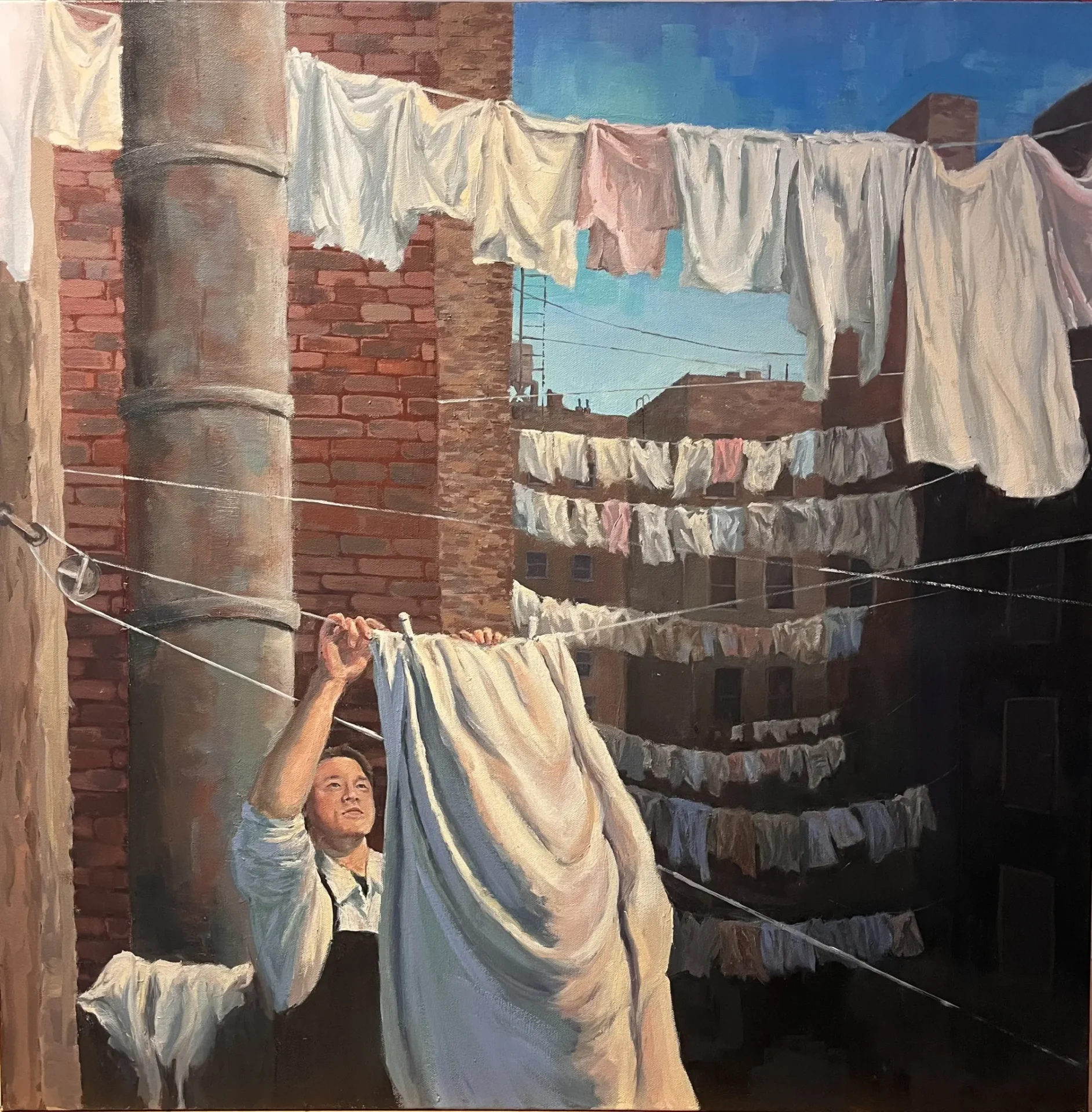
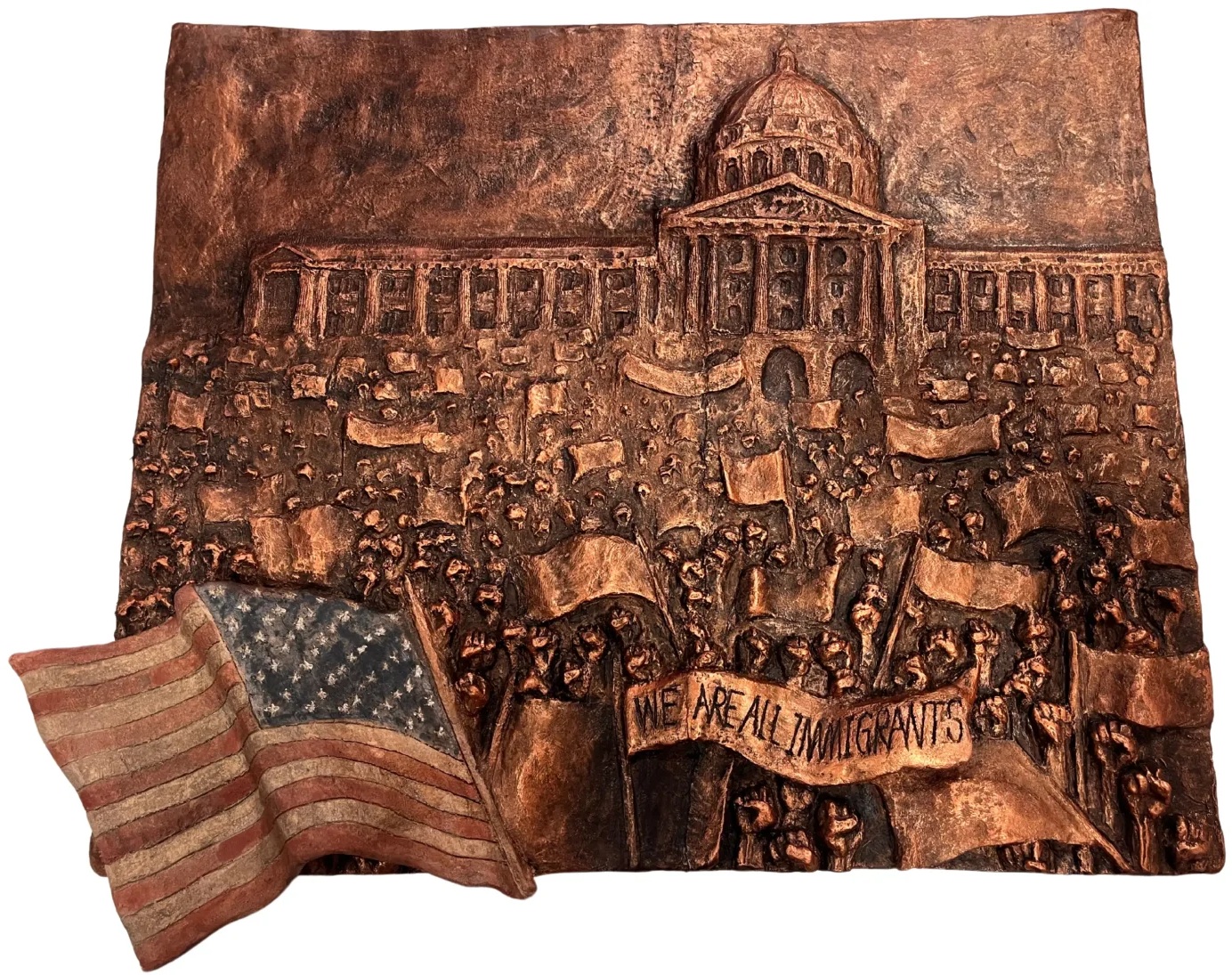
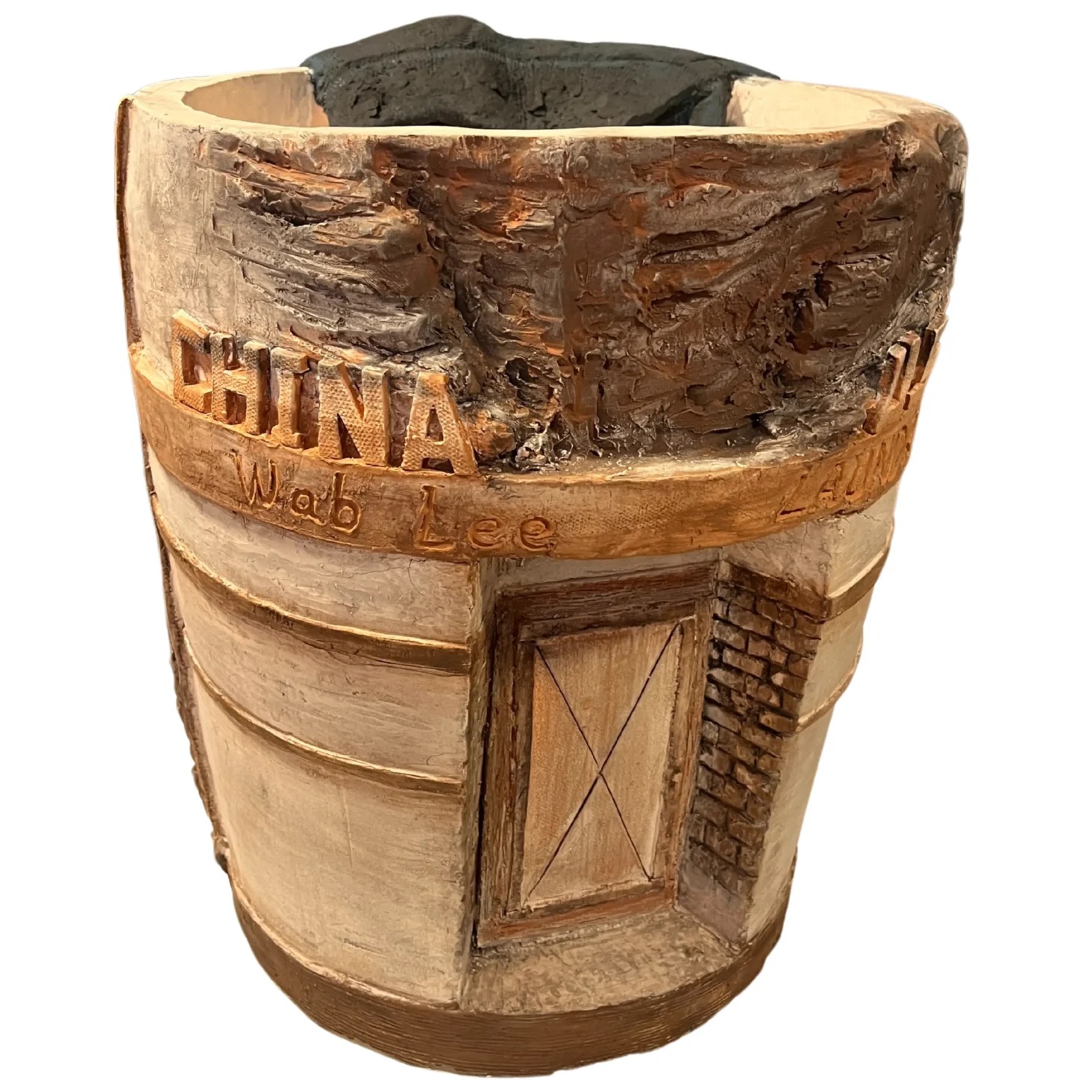
“Participating in this project was a great opportunity for me as a cityscape painter. It allowed me to learn more about the history and stories of San Francisco that I hadn’t explored deeply before. I usually focus on contemporary scenes and work alone, following my own interests, so this project gave me a new perspective. Working as a team with other painters, thinking about the history of Chinese American laundries, and figuring out how to express that through painting was all a new experience for me. It was challenging but also exciting to combine my personal painting style with a larger historical theme. Sharing ideas with others made the whole process inspiring and meaningful.”
“Eras change and the society adapt. However, when we look back the sad and helpless history of Chinese laundry industry, we still can feel the perseverance of immigrants groups carry through generations.”
“It is a cool way to remember and honor an earlier version of San Francisco Chinatown. It is cool because you can look at a piece and ask questions about historical events, you can also connect to it on an emotional and personal level. These pieces aren’t museum artifacts, they are current and immediate efforts to understand our city’s history from an imperfect record.”
Together, these student voices from the heart of the exhibit—bridging past and present through scholarship, artistry, and collective memory.
Historical Laundry Artifacts
Featured historical objects from CHSA’s collections include early-1900s, starched Ide Collars from Arrow, coal irons, vintage water spraying cans, and other artifacts across different eras of Chinese laundries throughout the United States.
These historical artifacts from Chinese laundry businesses offer powerful insight into the everyday lives and struggles of early Chinese immigrants starting their own businesses while adapting to their new lives in America.
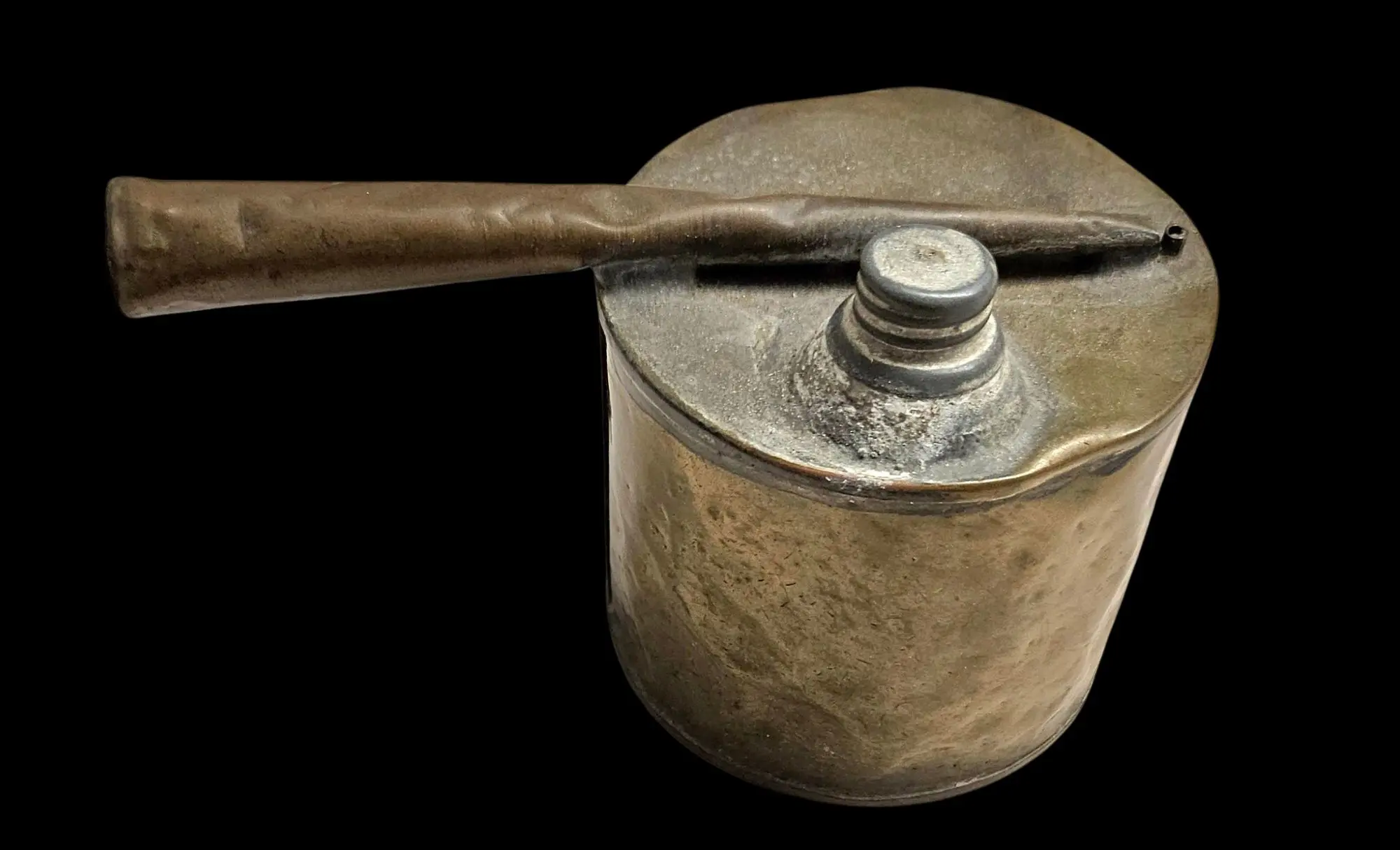
Laundry Water Spraying Cans
Brass
Date Unknown
Before steam irons, cans like these were used to spray water on laundry before ironing. The lid of the gold-colored can is inscribed with the Chinese character 祥 (xiáng) that is associated with good luck and harmony.
Chinese Historical Society of America Collection
Gift of Mr. and Mrs. Benny Lau
FIC-B-000218
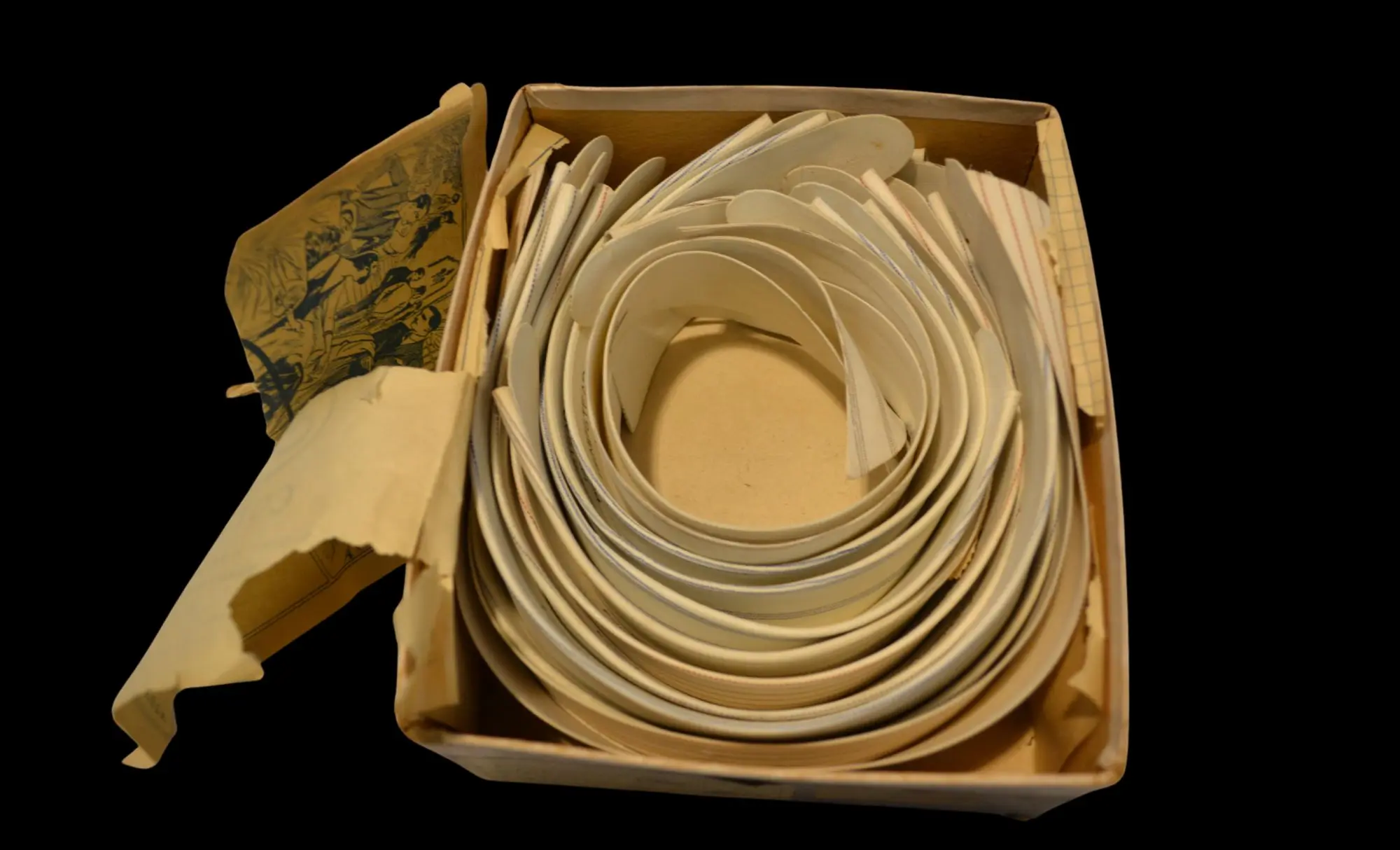
Shirt Collars
HEMPSTEAD, 14²”- 10 Ide Collars by Arrow
1900-1920
Disposable collars became popular starting in the mid-19th century as a way to avoid the time and labor of washing an entire shirt.
Chinese Historical Society of America Collection
Gift of Pass Sony Loy
1984.215.1c
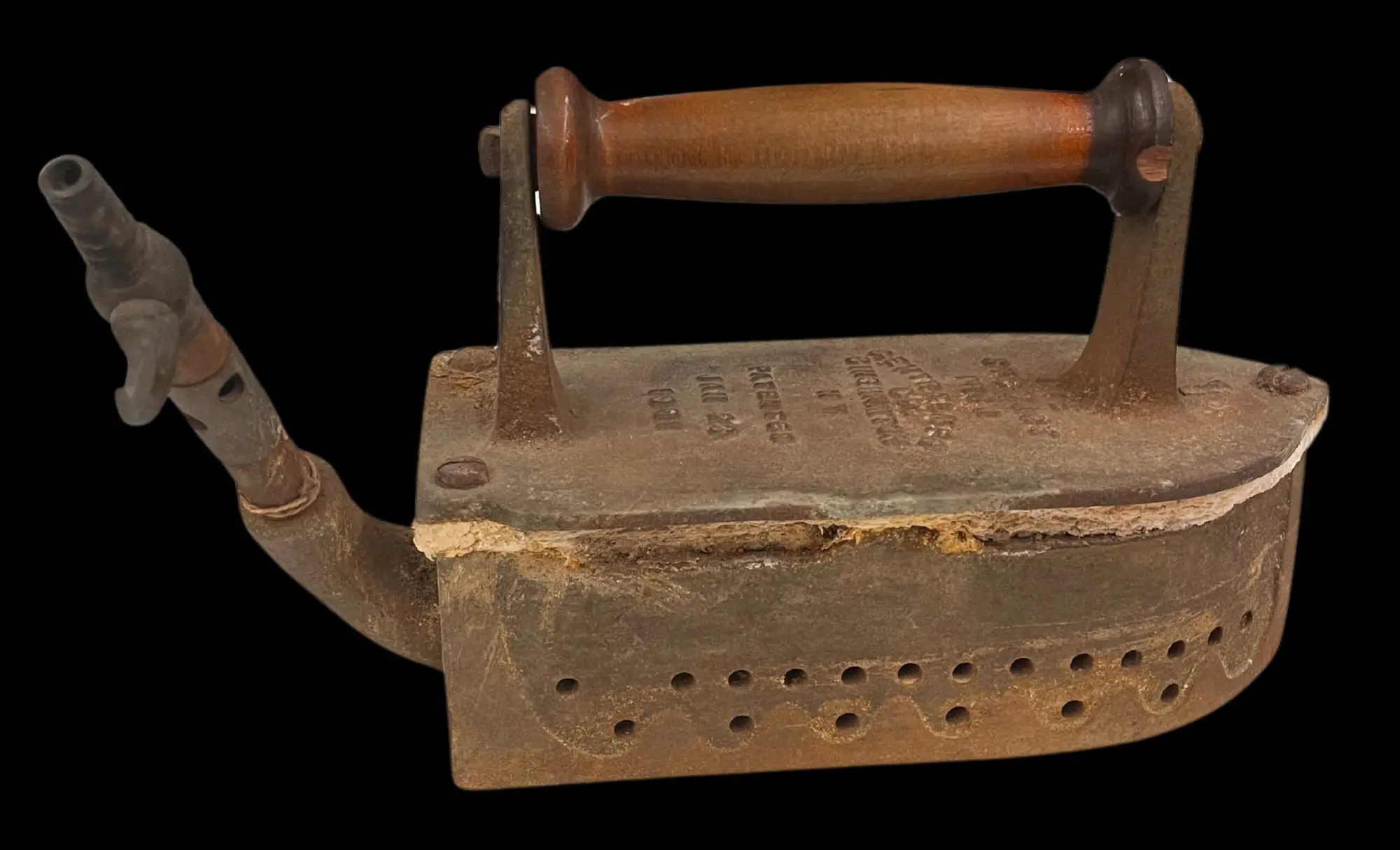
Large Iron
Date Unknown
This iron is very heavy–between 8 and 9 pounds. The top portion comes off so that hot coals can be put inside. The holes around the bottom section allow for air circulation, which keeps the charcoal burning. The nozzle in the back of the iron is thought to have been connected to a water hose, thus making spray cans unnecessary.
Chinese Historical Society of America Collection
FIC-B-000655
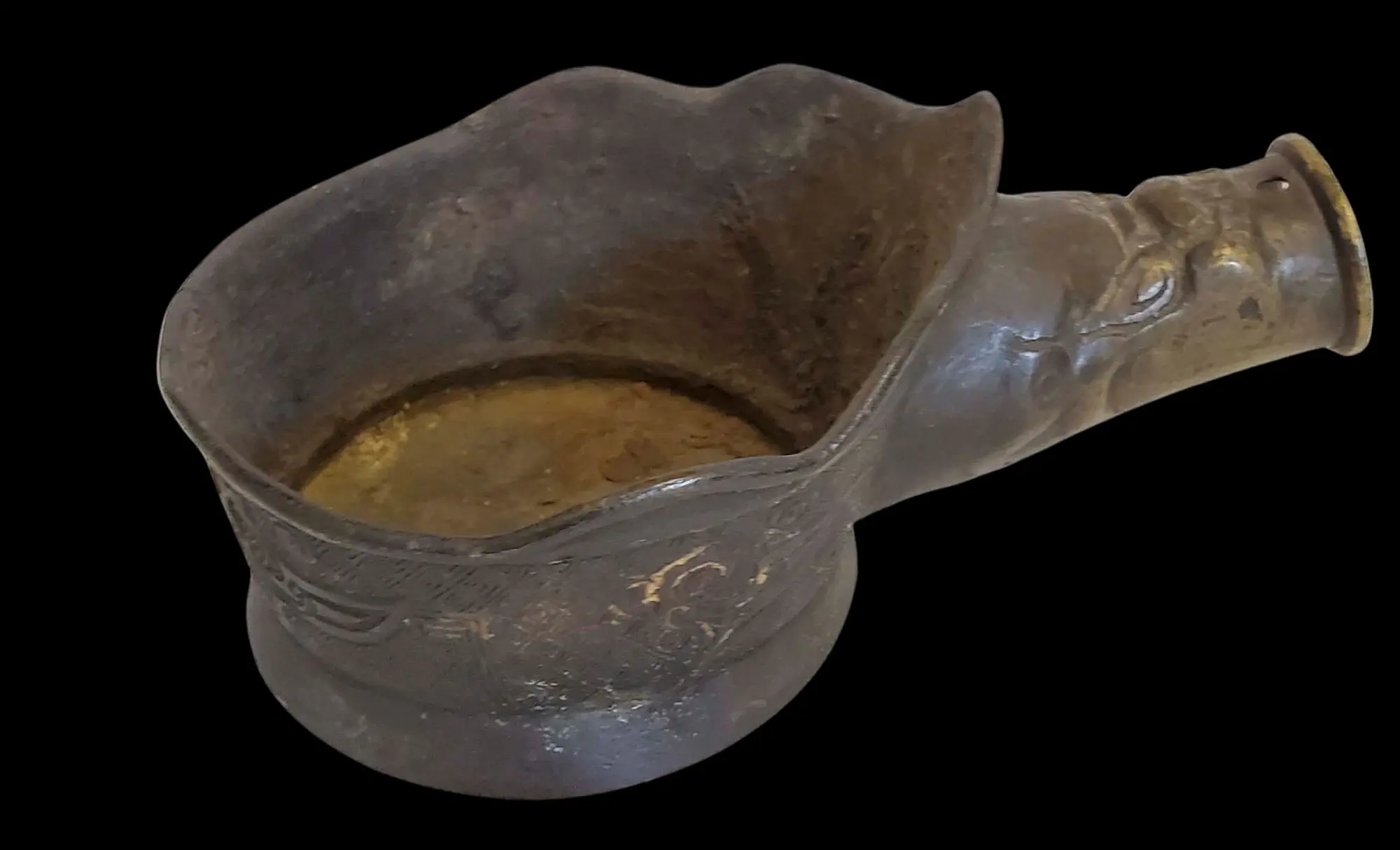
Coal Iron
Date Unknown
When this iron from the 19th century was used, a hot coal would be placed in the pan and then the iron would be run in a circular motion over a piece of clothing. The smaller size made it easier to lift and prevent scorching; thus this iron was also called a “silk iron” because it was used on silks and other delicate fabrics. The lip of the pan is higher closer to the handle; this was to prevent embers from falling out and burning the launderer’s hand. Look closely at the etchings on the outside of the pan; they recall the designs seen on ancient Chinese bronze vessels, turning this object from an everyday tool into a work of art.
Chinese Historical Society of America Collection
Gift of Charles Leong
1969.6.2
Laundering Identity: Race, Work, and Belonging
This powerful collaboration invites deep and connected reflection on historical Chinese American themes of labor, resilience, and identity through the lens of laundry businesses, their owners and workers. In reflection, we appreciate the importance of laundry businesses for not only sustaining Chinese families but also helping build early Chinese American communities, even as they faced legal and social discrimination. Today, they are recognized as symbols of both hardship and perseverance in Asian American history.
“We’re living at a point in time where racist history is beginning to feel familiar. Particularly, aspects of Chinese American history and those of laundry workers—where we’ve been and what we’ve experienced as an immigrant group—is coming back and manifesting itself in newer ways.”
— Janice Pettey, Interim Executive Director of CHSA